


Biomass Boiler
Biomass boiler uses thermal energy from the combustion of biomass fuel and air to produce superheated steam from feed water. Biomass fuel usually has a high moisture content, which leads to low boiler efficiency. The boiler efficiency can be increased by using heat recovery devices to decrease the temperature of flue gas before it is exhausted from the boiler. Three heat recovery devices found in a typical installation of biomass boiler are economizer, air heater, and flue gas dryer. Economizer increases feed water temperature, air heater increases air temperature before combustion, and flue gas dryer decreases the moisture content of fuel. Limited available thermal energy of flue gas means that a decision must made in selecting the sizes of these devices.
Advantages of Biomass Boiler
Renewable Energy
Biomass boilers use a renewable energy source that can be replenished quickly over a short period of time. This makes biomass fuel more sustainable than other non-renewable fossil fuel boilers, such as oil.
Lower Emissions
Biomass boilers will produce fewer carbon emissions than other traditional heating systems. This is because the biomass fuel used is burned more efficiently, which in turn will create fewer pollutants, making it a great way to offset your carbon footprint all for greener living.
Cost-effective
Biomass boilers are a lot more cost-effective than other traditional boilers. The price for biomass fuel alone, such as wood pellets, is considerably lower compared to gas and oil. The cost can also alter depending on the type of biomass fuel used and the price of installation but generally will save you money overall on your heating bills.
Versatility
Biomass boilers can not only provide heating to homes and other small offices but can also generate on-demand hot water and electricity. A primary heat source is used, but Biomass Boilers can also use a backup heat source in contrast with other heating systems, such as solar thermal or geothermal.
Efficiency
The efficiency of biomass boilers can vary on several factors, such as the type of biomass fuel used, the boiler size, and regular boiler maintenance. Biomass fuels all have different energy densities; for example, wood pellets have a higher energy density than wood chips, meaning that wood pellets will deliver more heat per unit of energy than wood chips.
-
 Biomass Environmentally Friendly Steam BoilerIt is a kind of biomass boiler, is a steam boiler with biomass as raw material, environmentalAdd to Inquiry
 -
 Fully Automatic Biomass Heating BoilerThermal efficiency up to 95%, the boiler fuel material pressure block, no pollution to the air, canAdd to Inquiry
 -
 Fully Automatic Biomass Steam BoilerBiomass boiler has reasonable structure, advanced technology, less floor area, small shape,Add to Inquiry
 -
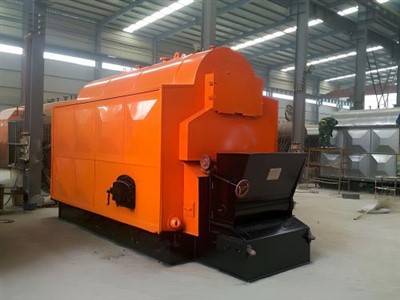 Chain Fired Steam BoilerThe chain grate biomass steam boiler adopts a large space furnace + reasonably arranged secondaryAdd to Inquiry
 -
 Phase Change Hot Water BoilerThe biomass boiler with phase change under pressure has reasonable structure, advanced technology,Add to Inquiry
 -
 Fully Automatic Biomass Hot Water BoilerThe biomass confined water boiler is a new type of boiler with the most comprehensive theoreticalAdd to Inquiry


- Tel: +8615833999209
- Whatsapp: +8615833999209
- Fax: +86-318-7251808
- Email: info@hbhongze.com
- Add: 2 North Suheng Road, Raoyang County, Hengshui City, Hebei Province, China.
Why Choose Us
Our Factory
Founded in February 1994, China Hebei Hongze Boiler Manufacturing Co., Ltd. is a high-tech enterprise focusing on the design, manufacture and installation of boilers and environmental protection equipment. Is the state administration of quality and technology supervision, inspection and quarantine designated production of boilers and auxiliary machinery accessories professional manufacturers, has obtained a number of product patents.
Our Products
The boiler products produced by our company mainly include: WNS series 0.5-20 tons gas-fired boiler, SZS series 20-100 tons gas-fired boiler; DZL series 1 t - 200 t lan-burning carbon boilers, DZL series 1 t - 200 t coal-fired boilers, DZL series 1 t - 200 t biomass fired boilers. Among them, large coal-burning phase change pressure heating boiler and twin-body steam boiler series products have been China's national patents, since the launch of the market, by the majority of users love and praise!
Certifications
Our company has obtained a number of patent certificates in China, including the patent certificate of "pressurized phase-change hot water boiler" in 2011; Obtained the patent certificate of "dual-fuel CNC boiler burning biomass or coal" and the patent certificate of "biomass pellet boiler" in 2014; Obtained the patent certificate of "a micro coal atomization boiler" and "a micro coal atomization burner" in 2015; In 2016, I obtained the patent certificate of "a new type of low-carbon boiler with low nitrogen combustion" and the patent certificate of "a low-carbon boiler with low nitrogen combustion". The patent certificate of "one denitrification device" obtained in 2018; Obtained the patent certificate of "a dual-grate dual-body boiler" in 2019.
Our Service
Pre-sales service: Technical consultation at any time, patient guidance and communication;
Sales services: Help customers to design the plane layout, reasonable layout and guide the construction.
After-sales service: Always pay attention to and help every customer to solve all problems in the process of using our products.
What Fuel Does a Biomass Boiler Use
Wood Chips
Wood chips are small pieces of wood which have been taken from logs and other general wood waste. the sizes of wood chips will vary. Wood chips are reasonably cheap and readily available but not always as efficient as their pellet counterpart. Wood chips are suited more for heating larger buildings. You can use wood chips, as well as pellets, in an automated system that uses a hopper to feed the boiler.
Wood Pellets
Made from compacted sawdust, woodwork/forestry waste or wood shavings, wood pellets are the most frequently used fuel for domestic biomass boilers. They are designed well to suit the automated hopper system and are often sold in large quantities, so that you can stock up for continued usage. Wood pellets take up little room but provide great efficiency. Wood pellets are the most consistent and reliable fuel option, with low moisture content and standardised sizes creating an easy-to-use experience.
Wood Logs
Logs are possibly the least common choice for biomass boilers these days. Using wood logs is a valid option but requires the fuel to be fed by hand. Buying logs can be cheap, however the number of logs required in order to reach satisfactory heat levels can be high. It is recommended that those with a larger property with more suitable storage space go for this option, as well as those looking for more control over the fuel input.
How Biomass Boilers Work
Biomass boilers operate on a straightforward principle of burning biomass to generate heat. The primary components of a biomass boiler include the fuel storage system, the combustion chamber, the heat exchanger, and the flue gas outlet.



Fuel Storage: Biomass boilers require a storage area for the biomass fuel. This can be in the form of a fuel hopper that feeds the biomass to the combustion chamber automatically.
Combustion Chamber: The biomass fuel is fed into the combustion chamber, where it comes into contact with oxygen and ignites. The combustion process releases heat energy in the form of hot gases.
Heat Exchanger: The heat generated during combustion is transferred to water or another heat transfer fluid within a closed system. The heat exchanger facilitates this transfer and ensures the heat is efficiently utilized.
Heat Distribution: The heated fluid is then circulated throughout the building, providing warmth to the space. This can be achieved through radiators, underfloor heating systems, or forced air circulation.
Flue Gas Outlet: After the combustion process, flue gases containing water vapor and other by-products are produced. These gases are directed outside the building through a flue gas outlet or chimney.
Types of Biomass Boiler Heating Systems
Fully automated systems are exactly that a delivery truck drops off the chipped or ground up waste wood with a live bottom floor, and a series of augers and conveyers move the wood fuel from there to the boiler. With computer controls and a laser eye that measures the amount of fuel in the metering bin, the system automatically turns the augers and conveyers on and off as needed to maintain the amount of wood fuel to sustain the boiler's pressure and thus, the temperature demand of the thermostat. In other words, no handling of the wood fuel is required by the boiler operator.
Semi-automated or "surge bin" systems require somewhat more manpower than the fully automated system. Have installed a semi-automated system to handle the base heat load for four buildings totaling about 100,000 square feet, with a 1.2 million BTU per hour output. This system has a smaller storage bin, shorter, simpler fuel conveyance system, and is designed to meet less than the full heat load of the facility. The rationale behind this is that wood fired boilers operate most efficiently when they are working hard, and that the peak heat load in our region is significantly higher than the load required on most days of the year. The peak load may only be required on one or two days of the year, and sizing a boiler to meet the peak would necessarily compromise its efficiency for the majority of the time it is in use.
Pellets are a more processed fuel, and therefore, more expensive, but the tradeoff is that they are more condensed and uniform, which makes them much more efficient to transport and store. Recent rises in fossil fuel prices have driven up the demand for pellets rather dramatically, so this is an historic high. Because of their uniform nature, the conveyance system for pellets is even simpler and less expensive than a surge bin system. These systems essentially use a grain-type of storage silo and move the fuel to the boiler using gravity. The condensed nature of this fuel also makes the storage requirements considerably smaller, reducing up-front construction costs. Pellet fired systems are available and appropriate for a fairly wide range of facility sizes.
The fourth type of system is combined heat and power or CHP, in which wood waste is used to generate power, and heat is created as a byproduct of the power generation system. The capital investment required for high pressure steam generation associated with CHP systems is significantly higher, and due to the risks associated with their high pressure (from a minimum of 100 pounds per square inch up to hundreds of psi), the systems require a highly skilled and certified operator, which adds to the operating expense. Creating power also requires a great deal more fuel than creating heat, and as will be discussed in the fuel supply section below, wood fuel is bulky and difficult to transport. Requiring a great deal more fuel can enlarge the travel radius to the extent that the savings benefits of the system diminish. Finally, CHP systems create heat on a year-round basis, so if that heat is not desirable for certain seasons of the year, an additional expense of installing a cooling tower is required.
How to Choose Biomass Boiler
Heating Capacity/Size: The size of the boiler determines its heating capacity. It’s essential to choose a boiler that matches the size of your property to ensure efficient heating. An undersized boiler will not heat your space adequately, while an oversized one can lead to increased fuel consumption and costs.
Fuel Type: Biomass boilers can use various fuels like wood pellets, chips, or logs. Your choice depends on availability, storage capacity, and personal preference. Pellets are more convenient and require less storage space, while logs are often cheaper but need more manual handling.
Boiler Efficiency: Higher-efficiency boilers convert a greater proportion of their fuel into usable heat. This results in lower fuel consumption and heating costs over time, making efficiency a crucial factor for both economic and environmental reasons.
Space Requirements: Biomass boilers and their fuel storage require space. Consider the space available in your property for the boiler and fuel storage, ensuring it fits without causing disruption.
Budget and Operating Costs: Initial installation cost and ongoing operating expenses are key considerations. A more efficient boiler may have a higher upfront cost but can lead to savings in fuel costs over time.
Maintenance Requirements: Different boilers have varying maintenance needs. Consider how easy it is to maintain the boiler, the frequency of required maintenance, and whether you’ll need professional services.
Common Applications for Industrial Biomass Boilers
Industrial biomass-fired boilers are now popular. They are a sought-after energy option in today's society. Industrial biomass-fired boilers use biomass as their main fuel. They are for heating, evaporation, or power in many industries.
First and foremost is the food processing industry. Food factories need lots of steam for processing and production. They also make lots of organic waste. Converting this waste into biomass energy meets the manufacturers' heat demand. It also recycles resources.
Second, the pulp and paper industry is also a key user of industrial biomass boilers. These factories produce a lot of waste wood and wood chips each year. In the old way, these wastes will be a burden and a source of pollution. Biomass boilers replace steam demand. They also reuse effectively.
Also, biomass boilers are often the main energy option in energy-intensive industries. These include pharmaceuticals, chemicals, and medicine. Biomass is cheaper than traditional thermal power. It also avoids pollution when oil and gas prices rise.
Power Generation
Society needs power. To meet the demand, we have to make electricity sustainably. Biomass fired boilers are a sustainable and efficient technology for generating electricity.
Biomass-fired boilers use organic waste as the main fuel. The waste is gasified and burned at high temperatures to make steam. The steam then drives a turbine generator rotor and produces electricity. Biomass boilers can cut carbon dioxide and other pollutant emissions by 30 to 50%. This is compared to coal-fired power plants.
In addition, using biomass as the primary fuel has the following advantages:
Renewable: Biomass comes from unlimited plant and animal resources. It is renewable, unlike fossil fuels.
Low cost: Biomass is a waste product. It is cheap to purchase, so power plants can provide electricity at a much lower price.
Versatility: All biomass types can be used as fuel. Power plants can choose the best material based on local resources.
Textile Processing
The role of industrial biomass boilers in textile production is primarily to provide energy. Textile production typically needs lots of heat. It is used to heat water, make steam, or directly heat production equipment. This heat helps with fiber handling, dyeing, drying, and other processes. The boiler can burn biomass to make heat. It supplies this heat to all parts of textile production. This cuts costs and pollution.
Biomass boilers are important in textile production. They have many benefits:
First, they use renewable resources as fuel. This reduces the need for traditional fossil energy.
Also, using industrial biomass boilers in textile production can increase company revenues. They can also improve product quality.
How to Maintain Biomass Boile
Daily Maintenance
Visual Inspection: Begin with a visual inspection of the boiler and its surroundings. Check for any signs of leaks, unusual noise, or smoke.
Ash Removal: Remove ash from the combustion chamber and ash bin to prevent buildup, which can reduce combustion efficiency.
Fuel Quality Monitoring: Check the quality of the biomass fuel. Make sure it is dry and free of contaminants, as poor-quality fuel can affect performance and cause damage.
System performance check: Monitor system performance indicators such as temperature and pressure. Any deviation from the normal range should be investigated immediately.
Weekly Maintenance
Combustion Chamber Cleaning: The combustion chamber is cleaned more thoroughly than routine ash removal. This includes removing any unburned fuel and soot deposits.
Heat Exchanger Inspection: Check the heat exchanger for signs of corrosion or blockage. If necessary, clean to maintain effective heat transfer.
Safety Valve Test: Test the safety valve to ensure it is working properly. This is critical to prevent overpressurization situations.
Check controls and sensors: Verify that all controls and sensors are functioning properly. This includes checking the calibration of thermostats and pressure gauges.
Monthly and Annual Maintenance Routines
Monthly Maintenance
Detailed Cleaning: Thorough cleaning of boiler components, including heat exchangers, combustion chambers, and flue. This prevents soot buildup, which can reduce efficiency.
Component Inspection: Thoroughly inspect all major components. Look for signs of wear, such as cracks or corrosion, and replace any damaged parts.
Seal and Gasket Inspection: Check seals and gaskets for signs of wear or leaks. Replace them as needed to ensure proper sealing and prevent air or water leaks.
Efficiency Test: Perform an efficiency test to measure the performance of your boiler. Adjust settings as needed to maintain optimal efficiency.
Annual Maintenance
Professional Inspection: Schedule a professional inspection of the entire system. A certified technician can identify potential problems that may not be apparent during a routine inspection.
Deep Cleaning: Perform a thorough cleaning of the boiler, including the heat exchanger, combustion chamber, and all flues. This helps maintain peak efficiency and extends the life of the boiler.
Component Replacement: Replace any components that are showing obvious signs of wear or are nearing the end of their expected life. This may include components such as the fuel supply system or the combustion chamber.
System Calibration: Calibrate all controls and safety devices to ensure they are functioning properly. This includes pressure gauges, thermostats, and safety valves.
FAQ
As one of the leading biomass boiler manufacturers and suppliers in China for over 25 years, we warmly welcome you to buy cost-efficient biomass boiler made in China here from our factory. Good service and competitive price are available. Contact us for quotation.
cost Thermal Oil Boiler, cost Horizontal gas heating boiler, package pressurized gas heating boiler